ByJohn A
Why Cryptocurrency Has Become So Popular
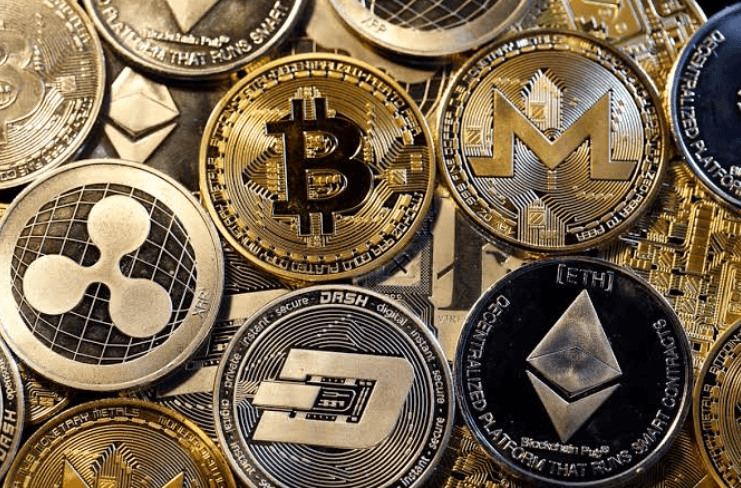
Cryptocurrency’s popularity can be traced to measurable gains in speed, cost, and accessibility. Transactions settle faster than traditional rails, with cross-border payments scaling down to a fraction of typical fees. Decentralized networks reduce gatekeeping and increase resilience, while open-source governance provides verifiable provenance and user-held keys. Real-world deployments in payments, supply chains, and asset tokenization demonstrate tangible efficiency gains, yet the long-run trajectory depends on on-ramps, regulation, and ecosystem maturation—areas where evidence still coexists with uncertainty.
How Crypto Moves Money Today: Speed, Fees, and Accessibility
Cryptocurrency transfers move money faster, cheaper, and with broader access than traditional systems, yet they exhibit variability driven by network load, protocol design, and counterparty risk.
The analysis quantifies transaction speed distributions, fee structure dynamics, and accessibility issues across networks, revealing onboarding hurdles and latency gaps.
Resultant models support freedom-oriented evaluation of efficiency, scalability, and user empowerment under varying congestion regimes.
Why People Trust Digital C Assets: Security, Sovereignty, and Transparency
The trust in digital assets rests on quantifiable security guarantees, sovereign control over private keys, and transparent operational provenance.
Empirical benchmarks indicate higher security benefits through cryptographic invariants, redundancy, and open-source audits, while sovereignty concerns center on user-led key management and permissioned access models.
Quantitative risk models quantify loss exposure, shaping policy, adoption, and freedom-oriented governance.
Real-World Use Cases Driving Adoption
Real-world use cases are increasingly quantified by transaction volumes, cost savings, and time-to-settlement metrics across sectors.
Analytics indicate scalable use cases across payments, supply chains, and asset tokenization, shaping adoption trajectories.
The regulatory landscape shapes risk-adjusted incentives, while user onboarding pipelines mediate friction.
Data-driven models emphasize efficiency gains, transparent governance, and interoperability as core drivers of sustained adoption.
The Roadmap to On-ramps: Education, Regulation, and Ecosystem Growth
To scale adoption, the roadmap emphasizes three interconnected pillars: education, regulation, and ecosystem growth.
Quantitative analyses show education access improves onboarding by measurable percentages, while regulatory clarity correlates with reduced transaction friction and capital flight.
Theory suggests network effects multiply via interoperable standards, open data, and modular custody.
Policy and pedagogy align to accelerate usable, trusted on-ramps for diverse participants.
Frequently Asked Questions
What Risks Do Beginners Face When Investing in Crypto?
The risks beginners face include crypto volatility and education gaps, leading to overexposure and mispricing. Quantitative analyses show exposure sensitivity rises with leverage, while theory-based models warn of regime shifts, information asymmetry, and liquidity constraints harming freedom-oriented investors.
How Do Taxes Apply to Crypto Trades and Earnings?
Crypto taxation depends on jurisdiction, with gains treated as capital or ordinary income; crypto trades trigger taxable events, while earnings from staking or mining may be ordinary income. Tax reporting requires meticulous records, timelines, and standardized valuation methods for accuracy.
Can Cryptocurrency Replace Traditional Banking Systems?
Coincidental numbers align as cryptocurrency regulation and blockchain scalability shape prospects: a cautious judgment states it cannot yet replace traditional banking; data shows gradual adoption, volatility, and regulatory constraints likely keep it as a complementary system rather than a complete substitute.
What Are Common Crypto Scams and How to Avoid Them?
Common crypto scams include pump-and-dump schemes, fake exchanges, and compromised wallets; to avoid them, investors monitor scam red flags, verify addresses, and implement multi-factor authentication, while recognizing that phishing emails exploit urgency and data breaches prompt cautious behavior.
How Do Wallets and Private Keys Actually Work?
Wallet mechanisms and private key security are governed by cryptographic primitives and deterministic key derivation; private keys authorize transactions while wallets store seeds, manage UTXO/account state, and bound access via multi-signature and hardware isolation.
See also: What Is Ethereum and How Does It Work?
Conclusion
Cryptocurrency’s ascent is a data-driven gradient: faster settlements, lower costs, and broader access redefine value flows. Quantified benefits—speed gains, fee reductions, and sovereignty metrics—couple with transparent cryptographic proofs to cultivate trust without central intermediaries. Real-world throughput in payments and supply chains compounds network effects, while education and prudent regulation shape scalable ecosystems. As adoption accelerates, measurable efficiency and provable provenance become the currency of legitimacy, turning speculative interest into sustained, data-backed utility.